

Introduction
Growing pomegranate can be simple when the site is sunny and well drained. If you want to grow pomegranate successfully, focus on climate, planting depth, steady watering, and light pruning. This guide explains how to grow pomegranate from planting through harvest, including the main pomegranate growing stages.

Choose a Variety and Site
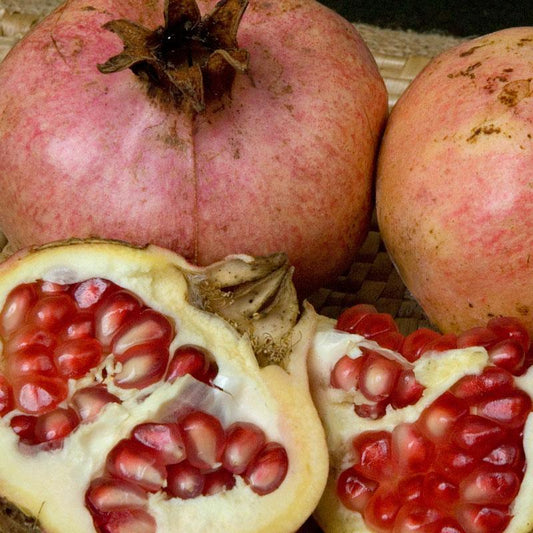
Do pomegranates grow on trees? Yes. Pomegranates naturally grow as multi-stem shrubs or small fruit trees. If you wonder what does a pomegranate tree look like, picture glossy green leaves, orange-red flowers, and round fruit on woody branches. How big do pomegranate trees get? Many reach about 10 to 20 feet tall and wide, depending on the cultivar and pruning.
Choose pomegranate varieties suited to your pomegranate growing zone. The pomegranate hardiness zone varies by cultivar, but many are grown in USDA Zones 7–10. Cold hardiness also depends on plant age and site conditions. Check your growing zone before selecting from available pomegranate trees. Full sun is best; aim for at least six hours of direct sunlight and soil with good drainage.
Planting a Pomegranate Tree
The best time to plant a pomegranate tree depends on whether you’re starting with a bare-root tree or a container-grown plant. Bare-root trees are generally planted during dormancy, while container-grown trees can be planted when conditions are mild and the soil is workable. Avoid planting during extreme heat or when the ground is frozen.
If you're wondering how long does it take for a pomegranate tree to grow, keep in mind that growth and fruit production depend on the tree's variety, age, climate, and growing conditions. Establishing the tree properly from the start helps support healthy growth and future harvests.
To plant a pomegranate tree, dig a hole about twice as wide as the root ball and no deeper than the root system. Position the tree so the root flare is level with or slightly above the surrounding soil. Backfill with the original soil, water thoroughly to settle the soil around the roots, and apply a layer of mulch while keeping it several inches away from the trunk.

Watering, Pruning, and Maintenance
Good pomegranate tree maintenance begins with consistent moisture while a young tree becomes established. Mature plants tolerate some drought, but steady irrigation supports fruit development. Sudden changes from dry soil to heavy rain or irrigation can contribute to fruit splitting. A soaker hose or drip system can provide slow, even watering.
Pomegranate trees naturally produce suckers around their base, so remove those you don’t want to keep. Prune out dead, damaged, or crossing branches to maintain a healthy structure and good airflow. Avoid excessive pruning, as heavy cutting can remove branches that would otherwise produce fruit. See our guide to pruning pomegranates as trees, shrubs, hedges, or espaliers for more options.
Pomegranate Growth and Harvest
How do pomegranates grow? Flowers appear after new seasonal growth, and some develop into fruit after pollination. Most cultivars are self-fruitful and can produce fruit alone, although cross pollination may sometimes improve fruit set. For a season-by-season look at pomegranate growing, see our pomegranate seasonal care guide.
How is pomegranate grown from seed? Growing pomegranate from seed is possible, but seedlings may differ from the parent plant. Gardeners learning how to grow pomegranate trees from seeds should expect a longer wait than with nursery plants because pomegranate seeds must first germinate and mature.
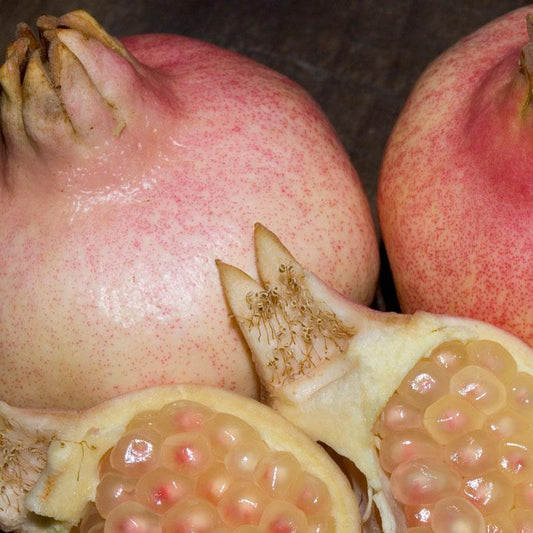
Harvest pomegranate fruit when it reaches the expected color and flavor for its cultivar. Some varieties become deep red, but not every ripe fruit is red fruit. Pomegranates do not meaningfully sweeten after picking, so sample one before harvesting the crop.
Conclusion
Learning how to cultivate pomegranate comes down to choosing the right cultivar, planting correctly, providing sun and steady moisture, and pruning lightly. Good pomegranate tree cultivation supports healthy plants throughout the growing season.
For more help with how to grow a pomegranate tree, watch our pomegranate growing video or keep the pomegranate field guide handy.






43 comments
Frances, Looks like you are probably in zone 7. There are a few pomegranates that are listed in zone 7. What kind do you have? How old is your tree/bush? It really only would need to get covered when it is young, unless you have one that is not rated for your zone.
We live north of Amarillo, TX but I don’t know what zone that is. But we sometimes get pretty harsh winters. Last winter our bush almost died, but we kept watering it in the Spring and it came back. This year it is beautiful. Should we cover it when we know it is going to freeze? My husband has covered it with foam sheet then plastic tarp. I don’t think it needs that much protection. My sister has a beautiful pomegranate bush (lives by El Paso) and she never covers hers and it produces lots of big fruit. Is it really necessary to cover?
Eberhart, pomegranates can be pruned during the winter when they are dormant. You can prune the suckers on the ground level and you can thin out crossing branches. You may want to prune your tree in a couple of steps so you will still get fruit the following year, but up to you. You can refer to this guide, http://ucce.ucdavis.edu/files/datastore/391-575.pdf, or you may want to consult a local arborist.
There is a pomegranate tree in our backyard about 12 feet tall. Grows lot of fruit but the fruit is not easy to harvest unless I climb on the roof. Not save, I am too old for that. How can I cut the tree back into a shorter bush to manage the harvest from ground level. Please help. The tree is said to be 14 years old.
Maria, I am not sure about growing in a tropical zone. It would be best to consult someone in your local area, like a nursery. Pomegranates are rated to zones 8-10, so they like it hot, but I am not so sure about your high humidity. I would think those trees need a dormant period as well, and they are not getting it with lows of 68.