

Pomegranates reward a sunny site, drainage, and steady care with ornamental flowers and richly flavored fruit. This start-to-harvest guide explains how to choose, plant, train, water, prune, and harvest a pomegranate tree. For a month-by-month task list, use the pomegranate seasonal care calendar.
Choose a variety for your climate and taste

Compare cultivar-specific cold tolerance, ripening season, fruit flavor, seed hardness, and mature size before buying. Pomegranates perform best where summers are long and warm. Winter hardiness varies by cultivar and is affected by tree age, wind exposure, and microclimate, so confirm the plant description and your growing zone. In colder areas, a protected south-facing location or a large container that can be sheltered may be practical.
Most pomegranates are self-fruitful, so one tree can bear fruit. A second compatible cultivar and abundant pollinator activity may improve fruit set. Browse available pomegranate trees after you identify the traits your site requires.
Select and prepare the planting site

- Sun: Give the tree full sun; abundant light supports flowering, ripening, and fruit quality.
- Soil: Use well-drained soil. Pomegranates tolerate a range of textures, but prolonged saturation can damage roots.
- Space: Allow for the cultivar’s mature spread and decide whether you will maintain one trunk or several.
- Airflow: Avoid cramped sites while protecting young plants from severe winter wind.
Dig a hole no deeper than the root system and roughly twice as wide. Keep the root flare at or slightly above the finished soil grade. Backfill primarily with native soil, water thoroughly to settle it, and add a broad mulch ring while keeping mulch several inches away from the trunk.
Plant bare-root and container trees correctly
Plant a dormant bare-root tree promptly after arrival, keeping its roots moist until it goes into the ground. Spread roots naturally rather than bending them into a small hole. For a container tree, loosen circling roots before planting. Stake only if the root ball cannot remain stable, and remove or adjust ties before they constrict the trunk.
Water for establishment and consistent fruit development

Water deeply after planting and keep the root zone evenly moist—not continually soggy—while the tree establishes. Once established, pomegranates tolerate some drought, but regular deep irrigation supports growth and fruit quality. Adjust frequency for soil texture, heat, rainfall, and container size rather than watering by a fixed calendar.
Irregular moisture, especially a dry period followed by heavy irrigation or rain as fruit nears maturity, can contribute to splitting. Maintain a consistent moisture pattern and a mulch layer. A soaker hose or drip system can help deliver water slowly to the root zone.
Feed without forcing excessive growth
Base fertilizer decisions on plant performance and, when possible, a soil test. Avoid excessive nitrogen: lush, tender growth can come at the expense of flowering and may be more vulnerable to cold or pests. Keep fertilizer off the trunk and follow the product label.
Train and prune lightly

Pomegranates naturally form multi-stem shrubs and send up basal shoots. For a shrub, retain several well-spaced trunks and remove weak, crowded, damaged, or crossing wood. For a tree form, select one to three main trunks and remove competing suckers regularly.
Fruit is produced on short spurs on older wood, so heavy annual pruning can reduce the crop. Make most structural cuts while dormant, then limit in-season work to suckers, dead wood, and obvious problems. See the detailed guide to pruning pomegranates as trees, shrubs, hedges, or espaliers.
Support flowers, fruit, and healthy foliage
Pomegranate flowers may be fruit-bearing or functionally male; some flower drop is normal. Protect pollinators and avoid applying insecticides to open flowers. Inspect leaves, shoots, and fruit regularly. If a pest appears, identify it before acting and begin with sanitation, pruning for airflow, water management, and other least-disruptive measures. Use any pest-control product only for a listed crop and pest and exactly as its label directs.
Know when pomegranates are ready to harvest

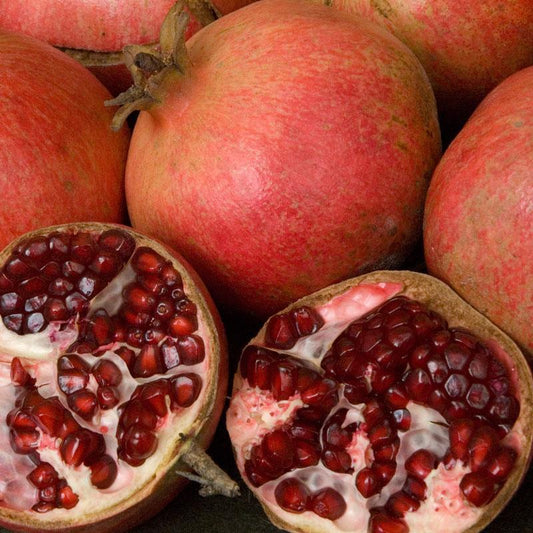
Pomegranates ripen on the tree and do not meaningfully sweeten after picking. Harvest timing varies by cultivar and climate. Look for the expected mature skin color, a more angular shape as arils fill, full size, and the cultivar’s normal flavor. Clip fruit with pruners instead of pulling it, leaving a short stem and avoiding damage to the rind.
Sample one fruit before picking the whole crop. Harvest promptly when ripe, particularly if rain is forecast, because mature fruit is more vulnerable to splitting. Handle fruit gently and refrigerate sound fruit for longer storage.
Quick start-to-harvest checklist
- Choose a cultivar suited to your winter lows and growing season.
- Plant at the correct depth in full sun and well-drained soil.
- Water deeply and consistently through establishment and fruit development.
- Train early, remove suckers, and preserve fruiting wood with light pruning.
- Monitor flowers and fruit; diagnose problems before treating.
- Clip fully ripe fruit and evaluate one before harvesting the crop.
Prefer to watch the essentials? Visit the how-to-grow-pomegranate video companion. For a concise reference to save or print, use the pomegranate field guide.


43 comments
I live in Central North Carolina. I have a pomegranate tree that I planted about 4-5 years ago. I has had fruit but I don’t know if I live in a place where the fruit will actually ripen. 2 years ago I picked the fruit before our first frost..it was not ripe and was inedible. Last year I think we had too much rain and the fruit cracked open before it was ripe. This year is has been very hot. It’s still in the 90s even now in October. I have alot of fruit and am wondering how long I should leave them on the tree. I dont’ knw who to tell if they are ripe, or if I live in a place that will let them ripen. Any advice?
Syed, my first question would be are you growing it in the correct zone. Pomegranates like hot summers and relatively cold winters to survive and thrive. The will not do well in the deep south. Your tree should have produced leaves the first year. In the spring you can try adding a fertilizer like our root boost blend. Make sure the tree is planted where there is good drainage and it should get even watering. Do you have gopher problems? They are a pest of newly planted trees and will kill a tree by eating the new roots.
Anna, all I can speak of is how long it would take a tree that we sell. The trees are potted 1 year old trees and once planted they will take 2-3 years to begin to fruit. I can imagine that one started from seed would take much longer the begin to fruit. You can use an all purpose organic fertilizer (not too much nitrogen)
In my country we do not have pomegranate cuttings so I grew them from seeds. How long will it takes for the plant to bloom and have some fruits? What type of fertilizer do poms love?
Hi
I have planted a pomegranate plant early this spring. For some reason it is still dormant and did not shoot at all. I’ve cut a small branch to check. It’s still live and moist. Please advise
what need to be done so that it promotes the new growth.
Thanks
Syed